
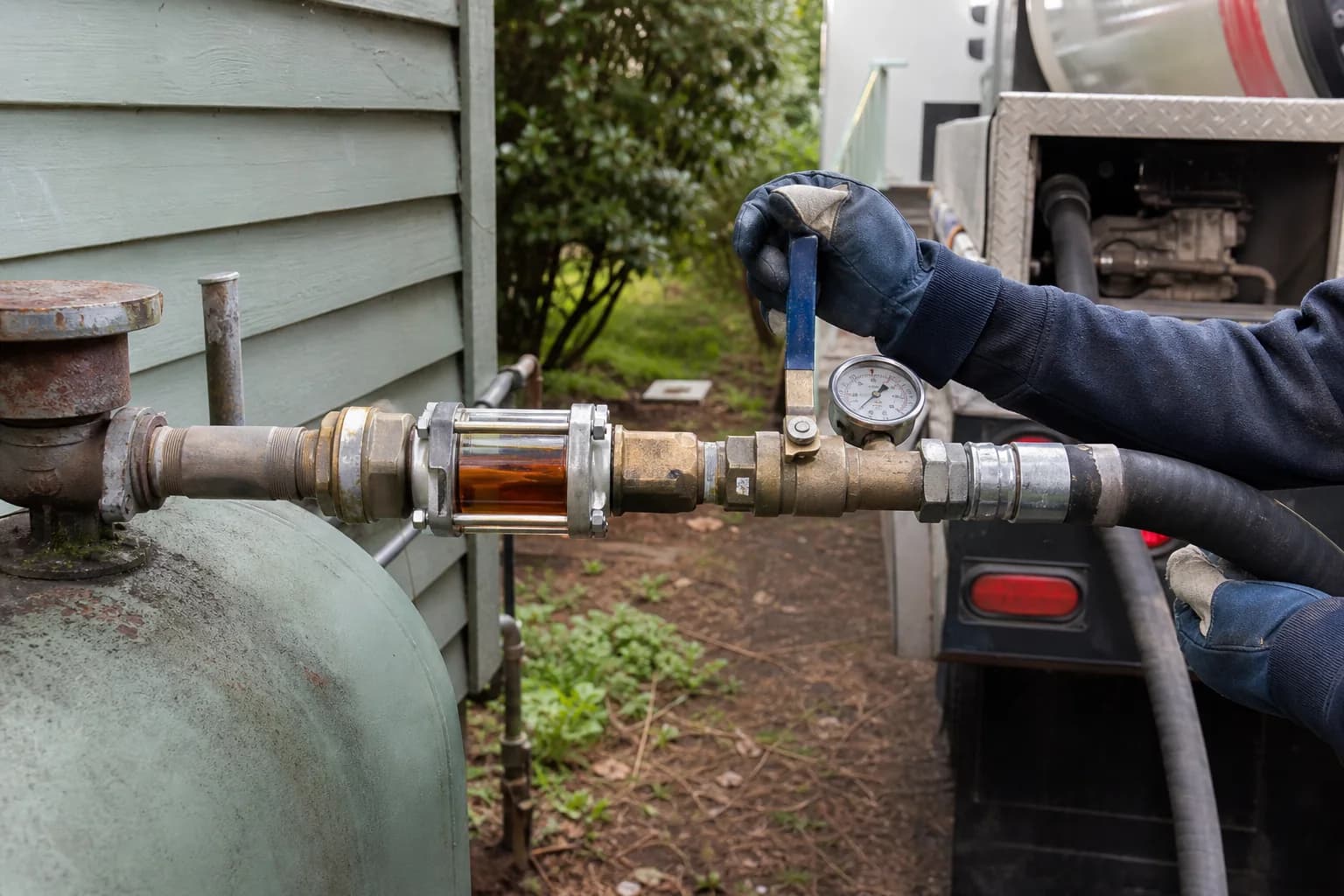
Most Eugene tanks come out of the ground with oil still in them. Before removal or in-place decommissioning, that oil must be pumped out, and you have options: a dealer buyback or transfer for clean oil, and licensed disposal for the sludge. Handled early, leftover oil becomes a credit instead of a disposal bill.
Why Eugene tanks are rarely empty when they come out
Tanks get retired mid-season, not on the day they run dry. A furnace dies in January and the owner switches to a heat pump or gas with half a fill still in the ground. An estate sale in College Hill or the Friendly area turns up a tank nobody has thought about since the nineties. University of Oregon area rentals are a regular case, because absentee owners converted the heat decades ago and never asked what was left in the tank. Whatever the story, the oil does not evaporate. It sits in the steel with rainwater condensation slowly collecting underneath it.
That mix matters because Oregon DEQ expects a tank to be emptied and cleaned before it is removed or decommissioned in place. The pump-out is not optional, so the only real question is whether you capture any value from the usable oil before the removal crew bills you to haul all of it away as waste.
Step one: find out how much is actually in there
Before you can choose anything, you need a number. The old-school method still works: open the fill cap and lower a clean wooden dowel or tank stick until it touches bottom, then read the wet line. A typical residential tank in Lane County is 550 or 675 gallons buried, or 275 gallons above ground, so a chart for your tank size converts inches to gallons. Water-finding paste on the bottom of the stick will show how much of the depth is water rather than oil, which is common after our wet Willamette Valley winters.
If you cannot find the fill pipe or do not want to open it, the crew that quotes your removal can measure it during the site visit. If you book underground oil tank removal, ask for the gallons-on-board estimate in writing, since pump-out and disposal volume is one of the few quote lines you can actually shrink before the work starts.
Usable oil has value: buyback, credit, and transfer
Heating oil is No. 2 fuel oil, essentially dyed diesel, and clean oil is worth real money. If the tank has been in regular use and the oil is recent, some full-service dealers in the Eugene-Springfield area will pump it out and either buy it back, credit it to a final bill, or transfer it to another oil-heated property you control. Landlords winding down an oil-heated rental near campus sometimes move the remaining fuel to another building rather than paying twice.
- Call your heating oil dealer first, before the removal is scheduled, and ask about pump-out buyback or account credit.
- Oil more than a few years old, or from a long-idle tank, may be rejected as degraded, so get a yes or no early.
- Transfers to another property generally need a dealer truck, not buckets, so plan the logistics with them.
- Do not put dyed heating oil in an on-road vehicle. It is untaxed fuel and illegal on the road, even though the engine would run.
Sludge, water, and degraded oil are the crew's job
Whatever a dealer will not take stays in the tank for the licensed crew. The bottom layer of any old tank is water, rust scale, and sludge, and no buyer wants it. As part of decommissioning, the contractor pumps the remaining contents, cleans the tank interior, and hauls the waste oil and sludge to a licensed disposal or recycling facility, with the volumes documented in the job paperwork. Oregon DEQ describes tank cleaning as part of a proper decommissioning under its Heating Oil Tank program, and the disposal records belong with the report your provider files.
Homeowners who end up with a small quantity of oil outside the tank, such as a few sealed containers from an old workshop, should not pour it into the tank to be rid of it. Lane County runs a household hazardous waste program at the Glenwood transfer station between Eugene and Springfield that accepts homeowner quantities of petroleum products. Call ahead about volume limits before you load the car.
What never to do with old heating oil
Every removal contractor in Lane County has a story about a yard that became a cleanup site because someone drained a tank onto the ground to save a disposal fee. Dumped or spilled heating oil is a petroleum release. It can contaminate soil and shallow groundwater, it can trigger sampling and excavation under the DEQ program, and it converts a routine removal into a five-figure cleanup. Down a storm drain is worse, because Eugene storm drains feed local waterways, not a treatment plant.
- Never drain oil onto soil, gravel, or pavement, even a little, even temporarily.
- Never pour it down any drain, septic system, or storm grate.
- Never burn it in a barrel, burn pile, or shop stove that is not listed for waste oil.
- Never leave a pumped-out drum of oil behind for the next owner. It will surface during their sale and point back to you.
How leftover oil changes your quote and timeline
On the quote, expect a pump-out line priced by the gallon for whatever is in the tank on removal day, which is why a dealer recovery beforehand directly lowers the invoice. On the timeline, a few hundred gallons adds pumping time on site but rarely adds a day. The bigger schedule risk is discovering the tank is mostly water, which hints at a shell breach and possible contamination, and that is a different conversation about soil testing. For the full picture of how the removal itself unfolds, from locate to filed DEQ certification, start with our complete homeowner guide to getting a tank out in Eugene and then get a written quote that itemizes the pump-out.
Request a fixed-price quote and we will write one back.
Request a quote