
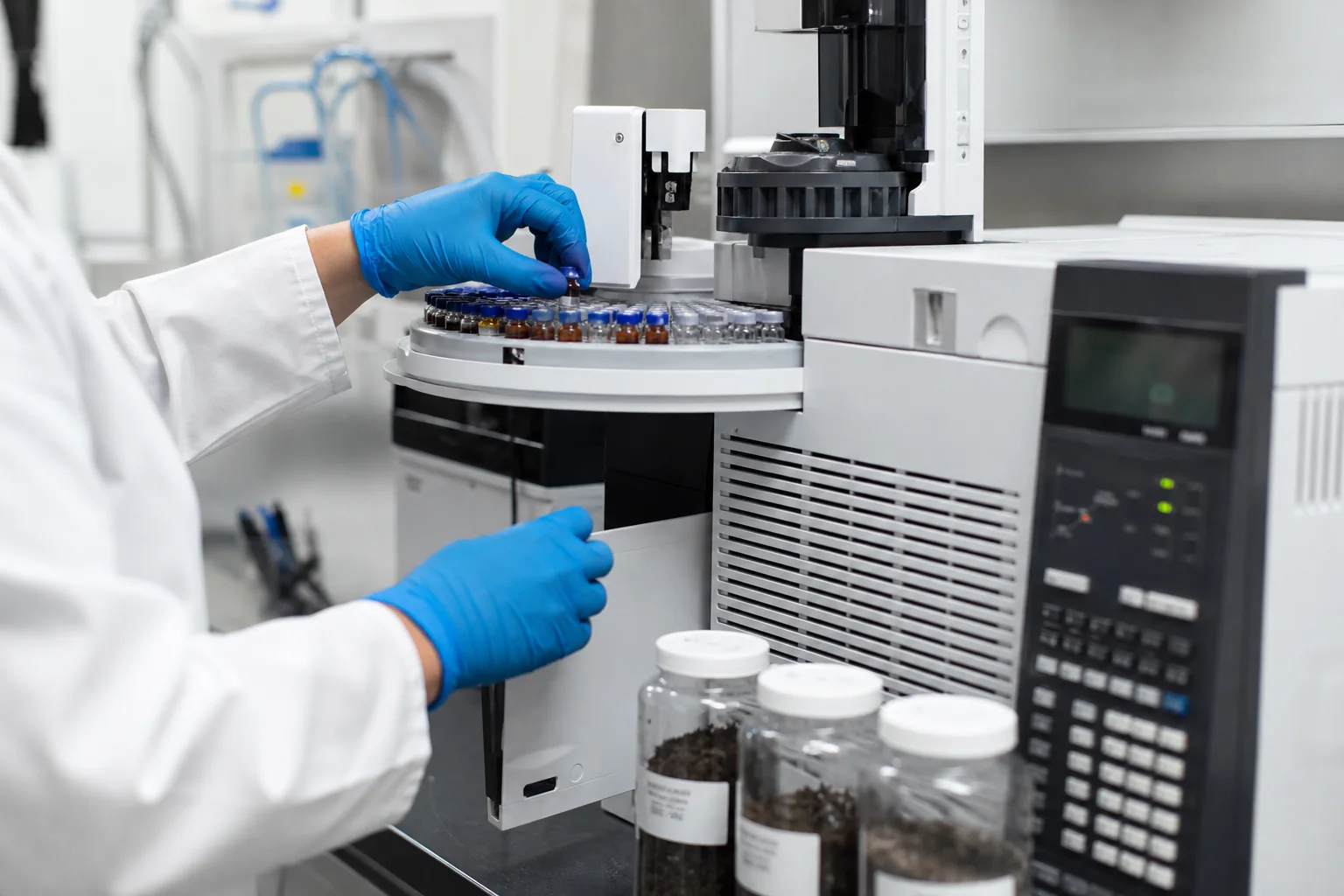
The soil samples taken when a Eugene oil tank is decommissioned are the part of the job that actually matters. A licensed provider pulls two samples from the right spots, sends them to an accredited Oregon lab for the NWTPH-Dx test, and compares the result against DEQ cleanup levels. A clean number closes your file. A high one turns the job into a cleanup.
Why the samples, not the dig, are the real deliverable
It is easy to think of a tank removal as a digging job, but the excavation is just access. The product you are paying for is a documented answer to one question: did this tank leak heating oil into the ground. A clean tank lifted out of a clean pit means nothing on paper until the lab confirms the soil around it is below the cleanup level. That is why a crew that quietly skips sampling is selling you a hole, not a decommissioning, a point worth keeping in mind whether the tank is coming out or being filled in place.
This step sits at the heart of the whole question of Eugene oil tank soil contamination, because the lab number is what decides whether your job ends as a simple closure or opens a cleanup file. The same logic runs through oil tank soil testing and cleanup, but the soil test is where a suspected leak becomes a documented yes or no.
Where the samples actually come from
Oregon does not leave sample placement to the crew's judgment. The rules set the spots, and a good Eugene provider follows them precisely so the report holds up. On a standard residential tank, two soil samples are the baseline, one from each end, which are the points most likely to catch a leak that ran along the length of the tank.
- On a tank removed from the ground, one sample is pulled from each end of the open excavation, taken from native soil at least six inches below the bottom of the hole and no more than a foot below where the tank sat.
- On a tank decommissioned in place under a slab or structure, the two samples come from within six inches of each end of the tank, collected one to two feet below the tank bottom by coring or probing.
- If the pit shows staining or a strong diesel odor, the provider takes additional samples to map how far any release reached, rather than relying on the two-sample minimum.
- If groundwater seeps into the sample hole, which happens often in the wet Eugene season, a water sample is collected as well.
What the lab measures
Heating oil is No. 2 fuel oil, chemically close to diesel, so the lab is looking for diesel-range hydrocarbons. The standard analysis is the Oregon method NWTPH-Dx, which measures diesel and lube-oil range total petroleum hydrocarbons in the soil. When a groundwater sample is also collected, the lab adds BTEX, the benzene, toluene, ethylbenzene, and xylene group, along with PAH compounds, since those are the parts of heating oil that travel in water and matter most near the creeks and the McKenzie corridor.
The samples leave Eugene by courier to an accredited Oregon lab, and a written result usually lands within about a week. The analysis itself takes a few business days, then the provider compiles the numbers into the report. None of this is instant, so if your testing is tied to a home sale or a construction start, give the lab its turnaround instead of expecting an answer the afternoon the tank comes out.
Reading the number that comes back
The result arrives as a concentration in milligrams per kilogram, which is the same as parts per million, and it only means something against the Oregon DEQ cleanup level that applies to your site. Oregon uses a soil matrix approach rather than one universal threshold, with levels commonly set at 100, 500, or 1000 parts per million of total petroleum hydrocarbons. Which level governs your property depends on conditions like the depth to groundwater, so the same number can be a pass on one lot and a fail on another.
- A result under the applicable cleanup level supports a clean closure, and the decommissioning report is filed as a finished, no-further-action job.
- A result over the level is treated as a confirmed release, which shifts the work into excavation and disposal of the affected soil under the same DEQ program.
- A borderline number near the threshold can call for extra samples to define the edges of the affected area before deciding how much soil has to move.
- A groundwater hit changes the picture, since a release that reached water is a more involved cleanup than soil alone.
A number over the line is not a disaster in most Eugene cases. The bulk of residential exceedances are handled as a routine homeowner-scale cleanup, where the same crew that pulled the tank during an underground oil tank removal digs out the affected soil, disposes of it properly, and re-samples to confirm the ground is clean. The cost and timeline climb, but the path is well worn at the DEQ Western Region office here in Lane County.
Where the results end up
The lab data does not just sit in your inbox. It becomes the spine of the decommissioning report the provider files with the state, which also carries a site map, a sketch showing exactly where each sample was taken, the chain-of-custody paperwork, the lab data sheets, and the receipts proving where any contaminated soil and the old tank went. Oregon spells out what that report has to contain in its Heating Oil Tank program, and the full requirements live in the state decommissioning rule at OAR 340-177.
Keep your copy of the filed report and the lab results with your deed and closing file. That document, with clean numbers behind it, is what answers the tank question the day you sell or refinance, and it is the reason the soil test, not the size of the hole, is the part of the job worth getting right.
A short checklist for the soil-testing step
- Confirm the quote includes lab soil sampling, not just tank removal, before the crew starts.
- Expect two correctly placed samples on a standard tank, and more if the pit shows signs of a release.
- Ask which accredited lab the provider uses and roughly how long the turnaround runs.
- Get the result in writing with the measured concentration and the cleanup level it is compared against.
- File the decommissioning report and lab sheets with your property records for the day you sell.
Request a fixed-price quote and we will write one back.
Request a quote