
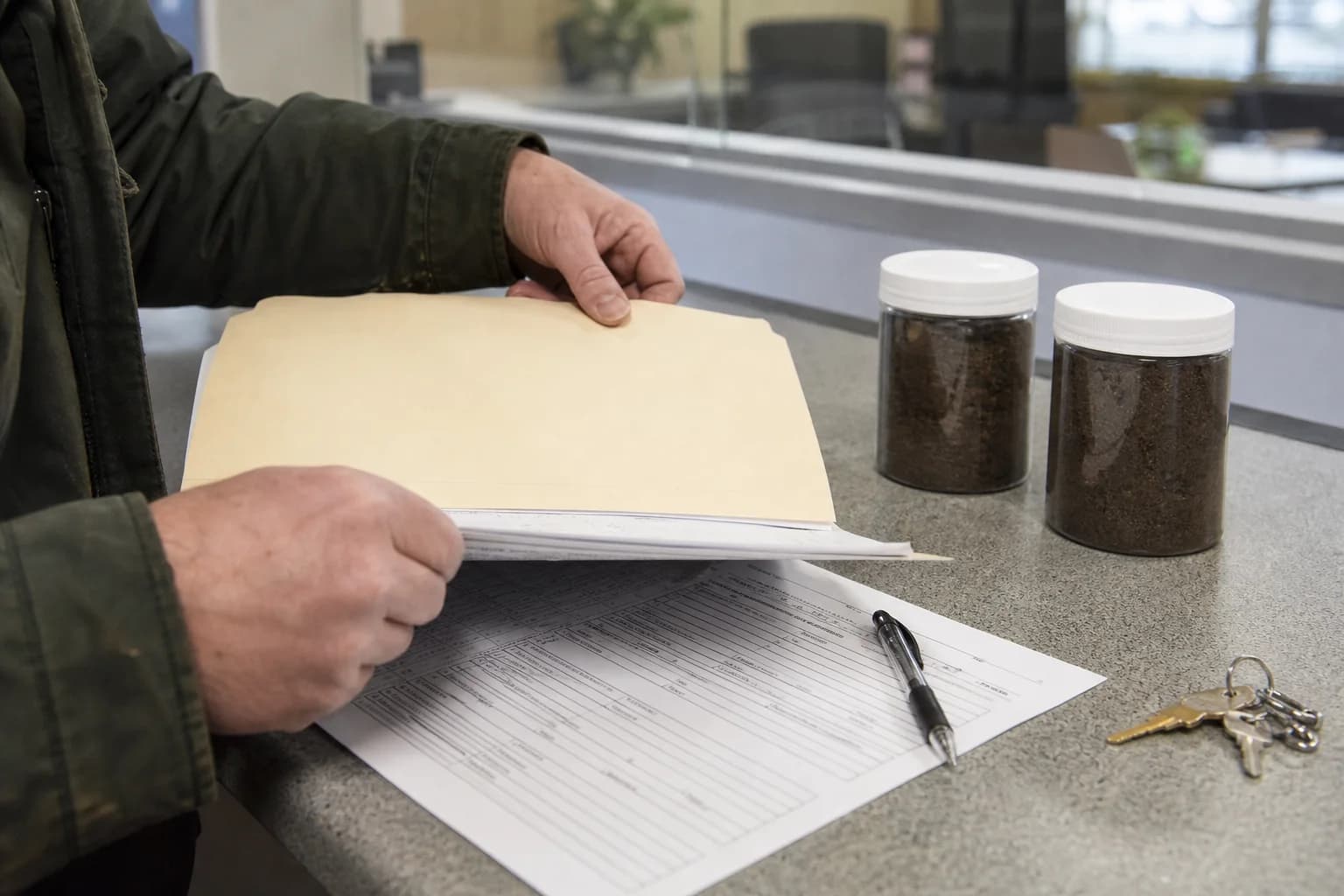
Oregon regulates residential heating oil tanks under OAR 340-177, administered by the Department of Environmental Quality (DEQ). For Lane, Linn, Benton, Lincoln, and parts of Douglas County, the responsible field office is DEQ Western Region on East 7th Avenue in Eugene. Western Region's queue is materially smaller than DEQ HQ in Portland, which means Eugene-Springfield homeowners get faster Decommissioning Report acceptance and faster No Further Action turnarounds than the urban-corridor median.
The rules are stricter than most homeowners expect and exist for a reason: Eugene sits on shallow Willamette Valley groundwater corridors that intersect EWEB's McKenzie River source-water protection layer, which makes heating oil releases a drinking-water issue, not just a property nuisance. The good news: the regulations are coherent and the process is predictable. The bad news: no state program reimburses the cost, and shortcuts are illegal and almost always more expensive than they appear.
This pillar breaks down every part of the program that affects a Lane County homeowner. For the broader context of when these rules apply, see the Eugene oil tank removal pillar. For what happens when sampling reveals contamination, Eugene soil contamination and DEQ cleanup covers the release side.
In this guide
- 01.The HOT Program from a DEQ Western Region perspective
- 02.What OAR 340-177 actually requires of a Lane County decommissioning
- 03.The DEQ-Licensed Service Provider requirement in Lane County
- 04.The Eugene-Springfield permit pathway by jurisdiction
- 05.Sampling protocol from a Lane County lab logistics view
- 06.The Decommissioning Report and the public DEQ database
- 07.When a release triggers the Cleanup Rule under OAR 340-122
- 08.Nobody reimburses you, so the file you build is the cost control
- 09.What happens if you skip the rules in Lane County
The HOT Program from a DEQ Western Region perspective
The Heating Oil Tank Program is the unit within Oregon DEQ that regulates residential heating oil tank decommissioning and cleanup. It exists for properties NOT covered by the broader Underground Storage Tank rules (which target commercial fuel storage) but still need oversight because residential heating oil tanks can leak and contaminate. Western Region in Eugene processes the Lane County files; same statewide rules apply.
- 01.It is mandatory. Any out-of-service residential heating oil tank in Oregon must be decommissioned under OAR 340-177, either by removal or by abandonment in place. Leaving an unused tank in the ground without decommissioning is illegal.
- 02.The contractor must hold a DEQ HOT Service Provider license. This is separate from an Oregon Construction Contractors Board (CCB) license. DEQ's licensed-provider list is public, so verify the licence number on any proposal against it before you sign.
- 03.The work ends with a Decommissioning Report. DEQ keeps a public database of decommissioned properties (the Heating Oil Tank database) searchable by address. The Decommissioning Report puts the property in the database as closed-out, which is the documentation a future buyer, lender, or title company will ask for.
- 04.Western Region handles the Lane County files. Cleanup Report acceptance timing depends on lab turnaround and DEQ review, and it varies from file to file. Staff there are familiar with the local contractor community, which tends to make questions on a submitted report easier to resolve.
What OAR 340-177 actually requires of a Lane County decommissioning
OAR 340-177 is the administrative rule. The technical requirements break down into seven items, all of which a licensed Eugene-area provider handles as standard practice:
- 01.Notice to DEQ. The licensed provider notifies DEQ Western Region before starting decommissioning work. Most providers handle this electronically as part of normal workflow.
- 02.Tank inspection and documentation. Dimensions, condition (pitting, corrosion, prior repair patches), original construction details if known, photographs. Eugene's pre-1925 craftsman inventory often produces tanks where the original construction is undocumented; field measurements substitute.
- 03.Pumping and cleaning. All residual fuel and sludge pumped to a vacuum truck, transported to a permitted facility, recycled or disposed of with a manifest. Most Lane County loads go to Pacific Northwest petroleum recyclers; the licensed provider has the standing relationship.
- 04.Vapor-free verification. Combustible gas indicator reading below 10 percent of the lower explosive limit before any cutting begins. This is a safety requirement; a tank that is not vapor-free is at flash-fire risk.
- 05.Soil sampling per DEQ guidance. Typically 2 to 4 samples from the tank pit on a removal, or through dedicated boreholes on an abandonment in place. Locations diagrammed against the tank footprint, samples shipped to an ORELAP-accredited laboratory.
- 06.Tank disposal. Steel cut into manageable pieces, hauled to a permitted recycler, recycling manifest retained for the Decommissioning Report. Lane County scrap recyclers handle the steel routinely.
- 07.Decommissioning Report submitted for registration. Provider certification, tank documentation, soil sample lab results, disposal manifests, photos, backfill specification. Filing waits on the lab, and most Eugene providers submit inside 21 to 30 days.
Note
Compliance lives or dies on the Decommissioning Report. No matter how cleanly the tank came out of the ground, a job with no Report on file is not a recognized decommissioning in DEQ's eyes. Western Region takes paper or electronic submissions; nearly all Lane County providers file electronically through the DEQ portal.
The DEQ-Licensed Service Provider requirement in Lane County
Oregon DEQ requires heating oil tank decommissioning to be performed by a service provider with an active DEQ Heating Oil Tank Service Provider license. This is not the same as an Oregon CCB license, and it is not satisfied by general excavation or hazardous waste hauling licenses. DEQ publishes the current list of licensed providers, and only a portion of them work Lane County regularly.
- 01.Training. Licensed providers have demonstrated training in DEQ sampling protocols, residual fuel handling, vapor-free verification, and Cleanup Report drafting.
- 02.Insurance. Pollution liability and general liability minimums are required for licensing; lender requirements often layer $1M general plus $1M pollution on top.
- 03.Disposal compliance. Licensed providers work with permitted disposal facilities and produce the manifests required for the Decommissioning Report. For petroleum-contaminated soil destined for Short Mountain Landfill, this is a routine workflow that licensed Eugene providers handle weekly.
- 04.Sampling competency. The soil-sampling protocol is technical; samples pulled from the wrong location or contaminated during collection produce invalid results. Licensed providers have shown they can do this correctly.
- 05.Report quality. DEQ Western Region occasionally rejects incomplete or substandard Decommissioning Reports. Licensed providers with current Lane County volume produce Reports DEQ accepts on first read; new licensees sometimes see early Reports bounced back for revision.
Watch out
Hiring an unlicensed excavator is illegal under OAR 340-177. An unlicensed party has no standing to file the Decommissioning Report, so the address never registers as decommissioned in DEQ's database and a buyer's lender or title company will reject the work outright. The usual ending: the owner pays a licensed provider to redo or supplement the job, and that second bill runs well past whatever the first one appeared to save.
The Eugene-Springfield permit pathway by jurisdiction
The local tank decommissioning permit and the DEQ filing are two separate things that people routinely conflate. Permits are jurisdictional. In Lane County the three pathways are City of Eugene, City of Springfield, and Lane County unincorporated. The licensed service provider pulls the permit; the homeowner is the permit-holder of record but does not interact with the permit office directly.
- 01.City of Eugene (most Eugene addresses). Permit Center at 99 W 10th Avenue. $130 to $260 typical fee. Turnaround 5 to 10 business days. Permit covers the excavation work, not the DEQ decommissioning itself. Significant Tree overlay (separate permit) may apply if the work extends into a regulated tree's critical root zone.
- 02.City of Springfield (97477 / 97478). Springfield Development & Public Works. Similar fee structure to Eugene. Turnaround typically 7 to 12 business days. Springfield does not have the same Significant Tree density requirement as Eugene proper.
- 03.Lane County unincorporated (Cottage Grove, Veneta, Junction City, rural). Permit through Lane County Land Management. Turnaround 7 to 14 business days. Rural Lane County properties often have larger lots and clearer access; permit issues tend to be simpler.
- 04.The Significant Tree overlay only applies to Eugene proper. If your decommissioning will excavate inside a Significant Tree's critical root zone, the City of Eugene Urban Forestry Significant Tree permit applies in addition to the standard decommissioning permit. Arborist letters are common documentation. Springfield and Lane County unincorporated lack this overlay.
Properties straddling jurisdictional boundaries (rare but real on the edges of Eugene-Springfield) sometimes need permits from both jurisdictions. Your licensed provider handles this layer.
Sampling protocol from a Lane County lab logistics view
A Decommissioning Report carries exactly as much weight as the soil samples behind it, no more. DEQ sampling guidance fixes what gets sampled, where, how many, and which analytes. Lane County lab logistics matter because there is no ORELAP-accredited heating-oil lab in Eugene itself; samples courier north every business day.
- 01.Number of samples. Minimum 2 from the tank pit on a removal. Standard practice is 3 to 4: one beneath each end of the tank footprint, one at the deepest point, plus a stockpile sample if soil is relocated. AIP cases pull 5 to 6 boreholes.
- 02.Sample locations. Diagrammed against the tank footprint with measurements to fixed reference points. The diagram becomes part of the Decommissioning Report.
- 03.Sample collection. Clean stainless-steel sampling tools, lab-supplied glass bottles with Teflon-lined caps, cooled to 4 degrees C, chain-of-custody documented. Eugene field samples leave by courier daily; same-day pickup, next-day lab delivery.
- 04.TPH-Dx analysis (NWTPH-Dx method). Total petroleum hydrocarbons in the diesel range, C10 to C24. Primary test for heating oil. A result at or above 50 mg/kg is a below-ground release; the cleanup level that then applies comes from DEQ's soil matrix at 100, 500, or 1,000 ppm depending on how the site scores.
- 05.BTEX analysis (EPA method 8260). Benzene, toluene, ethylbenzene, xylenes. Benzene is the binding constituent because of its mobility and toxicity.
- 06.Lab accreditation. An ORELAP-accredited laboratory only. Lane County has none of its own, so Eugene samples ship north by courier. Non-ORELAP results are not accepted by DEQ.
Tip
Ask your provider which lab they use and confirm ORELAP accreditation. Most established Lane County providers have standing courier relationships with one of the three Portland-area labs; turnaround from Eugene pickup to PDF in your inbox is typically 5 to 8 business days.
The Decommissioning Report and the public DEQ database
Once the work is done and the lab results are in, the licensed provider drafts and files the Decommissioning Report. DEQ has 60 days from work completion to receive it; most Eugene providers file within 30. The Report contains:
- 01.Contractor name, DEQ HOT license number, and certification
- 02.Property address and parcel ID
- 03.Tank dimensions, age (if known), condition observations
- 04.Sample location diagram
- 05.ORELAP lab analytical reports (full pages, not just summaries)
- 06.Photographs documenting the work sequence
- 07.Disposal manifests for tank steel and residual product
- 08.Backfill material specification and compaction notes
- 09.For AIP cases: structural justification narrative and fill material specification
DEQ enters the property into the Heating Oil Tank database. The database is searchable by address and shows the property's status (decommissioned with clean sample results, decommissioned with localised cleanup, abandonment in place, open case, No Further Action issued). A future buyer's lender or inspector pulls the address and reads whatever that entry says, which is why it has to say the right thing. Lane County title companies lean on it routinely during pre-closing diligence.
When a release triggers the Cleanup Rule under OAR 340-122
The moment one soil sample exceeds DEQ residential cleanup levels, the file stops being a decommissioning and turns into a release case. The same licensed provider stays on the job, but the governing rule shifts from OAR 340-177 (decommissioning) to OAR 340-122 (Heating Oil Cleanup Rule). A minority of Lane County decommissionings trigger this transition.
- 01.Additional sampling. Step-out borings to characterize the lateral and vertical extent of contamination. Typical Lane County scope: four to six step-out borings at multiple depths.
- 02.Excavation and disposal. Contaminated soil exceeding cleanup levels is removed, transported under manifest to Short Mountain Landfill (Lane County) for non-hazardous loads, or to Wasco Landfill for higher-concentration loads. Clean fill replaces it.
- 03.Confirmation sampling. Samples from the boundaries of the excavation confirm contamination has been removed. Multiple rounds are common, and each round adds lab and field time to the bill.
- 04.Cleanup Report. Separate from the Decommissioning Report. Documents the release, response, disposal, and final analytical results. Submitted to DEQ Western Region, with acceptance timing driven by lab turnaround and DEQ review.
- 05.DEQ No Further Action determination. The closing document. DEQ Western Region reviews the Cleanup Report and issues an NFA letter stating no further action is required. NFA follows the property in the public database and closes the case.
Nobody reimburses you, so the file you build is the cost control
Homeowners often reach this guide looking for the state program that pays for cleanup. There is not one. Oregon operates no reimbursement fund, no insurance pool, and no grant for residential heating oil cleanup, and DEQ is direct about where the obligation lands: the current owner of the property is responsible for any necessary cleanup even if the leak happened before he or she bought the property.
What the regulations do give you is a choice of closure route, and the choice is decided on paper. DEQ's generic remedy eliminates the need for site-specific risk characterization for qualifying sites, which is the whole saving. But DEQ only grants it if the file your licensed provider submits actually demonstrates each condition. The evidence, not the intent, is what closes the case.
- 01.The sampling plan is written before the dig, not after. Generic remedy conditions include soil TPH at or below 10,000 ppm and benzene at or below 0.1 ppm. A file with too few samples, or samples in the wrong places, cannot demonstrate those limits across the excavation even when the site genuinely meets them.
- 02.Groundwater has to be addressed explicitly. No groundwater impact is a hard condition. On the Eugene side of the county that is not a formality: shallow groundwater along the Willamette-McKenzie confluence, North River Road, Santa Clara and parts of Bethel means the report has to record what the pit encountered. Silence on the point invites a request for more work.
- 03.Physical conditions are documented, not asserted. At least 3 feet of clean soil cover, no free product, and no ecological risk all have to be shown. So does the limit of no more than 65 cubic yards of remaining soil above 500 ppm, which is a volume calculation the report has to carry.
- 04.Failing to qualify is not failing. A site that misses a condition closes under a risk-based cleanup instead, using either DEQ-developed cleanup concentrations or a site-specific corrective action plan. Both are legitimate closure ending in a No Further Action letter. They cost more because they carry the characterization work the generic remedy skips.
- 05.Unlicensed work forfeits the route entirely. Nothing an unlicensed contractor does can be filed, so there is no record from which DEQ could grant a generic remedy. The next owner pays to establish one from scratch.
Note
When you compare cleanup quotes, compare the reporting scope as closely as the excavation scope. Two providers can dig the same hole and only one of them produces a file that supports the cheaper closure route, and the difference shows up in the final bill rather than the quote. The Eugene contamination guide walks through how the pathway conditions play out address by address.
What happens if you skip the rules in Lane County
Unlicensed or unpermitted oil tank work in Oregon is illegal. Practical Lane County consequences:
- 01.No Decommissioning Report. An unlicensed contractor has no standing to file one, so the address never lands in DEQ's database as decommissioned. Future Eugene-area buyers, lenders, and title companies read the property as "open" or "unknown UST".
- 02.Resale friction or failure. Underwriters commonly flag an unknown UST as a closing condition. A property without a Decommissioning Report on file either does not close or closes only after the new owner pays for a re-decommissioning under license.
- 03.DEQ enforcement. DEQ Western Region can require redoing the work under license, levy administrative penalties, and (in cases involving environmental harm) pursue cleanup costs. Western Region's smaller queue means enforcement attention is concentrated and visible.
- 04.No usable record if a release surfaces later. Unlicensed work leaves nothing DEQ can file, so a release discovered afterwards starts from zero with no sampling history to lean on. The owner pays for the whole cleanup either way, but without a record the cheaper closure route is harder to reach.
- 05.Title insurance issues. Lane County title companies may decline coverage or carve exceptions for properties with unrecognized tank work, complicating future sales.
Get a quote
Ready to schedule a Eugene-area decommissioning?
Free site survey, fixed-price written quote, full DEQ closeout documentation filed at the East 7th Avenue office. Most surveys scheduled within 48 hours.
Request a Written QuoteMore Eugene guides on this topic
DEQ Rules: Common Questions
Does DEQ Western Region inspect every Eugene decommissioning?+
No. DEQ relies on the licensed provider's certification and the Decommissioning Report. Western Region staff do periodically audit Reports and conduct compliance inspections, particularly for new licensees or properties with prior issues. The licensing requirement exists precisely so DEQ can rely on the contractor rather than inspecting every job. Western Region's smaller Lane County caseload means staff are more familiar with the local provider community than Portland HQ is with the urban-corridor provider mix.
My property is in Springfield, not Eugene. Does the DEQ process change?+
The DEQ rules are statewide; what differs is permitting. Springfield Development & Public Works processes the local excavation permit rather than City of Eugene Permit Center. Turnaround is 7 to 12 business days for Springfield, 5 to 10 for Eugene. The DEQ Western Region office handles both. Springfield does not carry the City of Eugene Significant Tree overlay.
I have a basement tank in a 1920s West University craftsman. Do I need a permit?+
A basement or crawl-space tank is technically an aboveground storage tank (AST), not a UST under OAR 340-177. The DEQ filing requirements differ — no Decommissioning Report is mandatory for basement tanks — but City of Eugene Permit Center still requires a basic permit for the cutting and removal work, and most Lane County lenders still want documentation the work was done by a licensed contractor. Local providers handle basement-tank work as a routine sub-scope.
My licensed provider just gave me a quote. What should I verify?+
Three things. First, DEQ HOT license number — verify it on DEQ's public list of licensed providers. Second, $1M general liability plus $1M pollution liability insurance — ask for certificate. Third, recent Lane County closure history — ask how many local files they have taken to No Further Action in the last 12 months and how many closed under DEQ's generic remedy. Providers with current local volume are the ones who can carry a contamination case smoothly through to closure.
A previous owner did work in 1991. Is that documented in the DEQ database?+
Possibly. OAR 340-177 has been in effect since the 1980s but enforcement and documentation standards have tightened over time. A property where work was done in 1991 may have minimal paperwork; the DEQ database covers more recent decommissionings reliably, but pre-1995 records sometimes exist only as paper files. A buyer's lender may require new sampling on a pre-database decommissioning as a condition of closing. Worth checking the database against your address before any sale.
I own a UO rental. Is there any program that helps with the cleanup cost?+
No. Oregon has no reimbursement fund, insurance pool, or grant for residential heating oil cleanup, and that is the same answer for a rental as for an owner-occupied home. DEQ places the obligation on the current owner of the property even if the leak happened before he or she bought it, so inheriting the tank with the building does not shift it. What you can influence is the closure route, and that depends on whether the site meets the conditions for DEQ's generic remedy.
What if I just want to fill the tank and move on?+
Filling a tank without pumping, cleaning, and sampling is illegal under OAR 340-177. The valid version of "leave it in the ground" is abandonment in place, performed by a licensed provider, which still requires soil sampling, cleaning, filling with sand or CLSM, and a Decommissioning Report. There is no legal shortcut between "active tank" and "documented closeout". See the abandon vs remove decision pillar for when AIP is the right path.
How long is the Decommissioning Report kept in the DEQ database?+
Indefinitely. Once a Report is filed and accepted by DEQ Western Region, the property is in the Heating Oil Tank database permanently. This is a feature: future Eugene-area buyers, inspectors, and lenders can verify the closeout indefinitely. There is no decommissioning expiration.
Related services and references
Guide
Oil Tank Removal Eugene Pillar
The full decommissioning process end to end.
Guide
Oil Tank Soil Contamination Eugene
The OAR 340-122 cleanup workflow when sampling reveals a release.
Guide
Abandon or Remove Your Eugene Oil Tank
The two paths DEQ allows, and when each is structurally correct.
Guide
Oil Tank Removal Cost in Eugene
How regulatory requirements translate into Lane County line-item pricing.
Service
Underground Oil Tank Removal
Standard OAR 340-177 decommissioning workflow.
Service
Soil Testing & Contamination Cleanup
OAR 340-122 cleanups and generic remedy closure.