
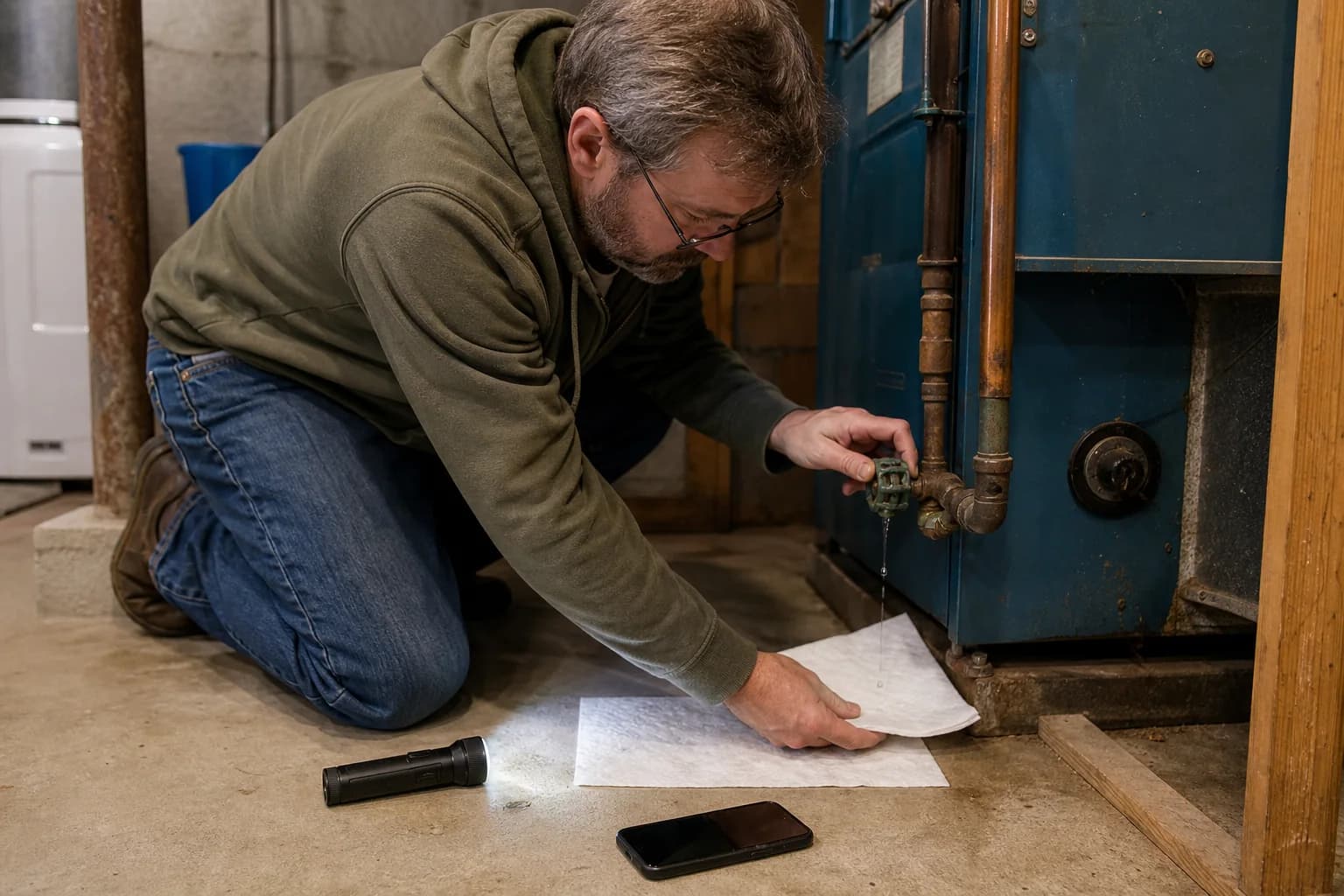
A suspected leak feels urgent, and some of that urgency is warranted, but the response is methodical, not frantic. Heating oil is not explosive like gasoline; the real exposure is environmental. In Eugene that matters more than usual, because the area's shallow groundwater ties into the McKenzie source-water system that supplies the city, so keeping a leak out of soil and drains is the priority.
This page is the immediate-action version. The cleanup mechanics and the cost picture are in the Eugene contamination guide.
The first hours
Whether you own or rent, these come first and none of them need a contractor yet:
- 01.Shut the furnace off so it stops pulling fuel through a failing line.
- 02.Open windows on the affected level. Oil vapor is an irritant in a closed space.
- 03.Contain visible oil with absorbent material to stop it spreading across flooring.
- 04.Keep it out of every drain. The hard rule in Eugene especially: nothing down a sink, floor drain, or storm drain. That is what turns a soil problem into a McKenzie-watershed problem.
Who does what: owners and tenants
Eugene's rental density means the person who finds the leak often is not the owner. The split:
- 01.Tenant: do the immediate containment above, then notify the landlord or property manager right away. Document what you see (photos, time, smell) and avoid disturbing the area. You are not expected to arrange the cleanup.
- 02.Owner or manager: get a DEQ-licensed provider out promptly, notify your insurer for the record, and report to the state if the release is large or reaching water. Keep the tenant informed; habitability obligations may apply if the home is affected.
Watch out
Do not send a handyman or unlicensed digger to "deal with it quickly." Unlicensed emergency work creates a release with no compliant record, which leaves you paying for a cleanup that then has to be characterized from scratch before DEQ can close it. For a rental, that also complicates the tenant situation.
The call list
Short and in order:
- 01.A DEQ-licensed service provider first. They contain, sample, and run the documented response.
- 02.Oregon Emergency Response System if the release is large or oil is reaching a drain, waterway, or neighboring property, important here given the source-water connection.
- 03.Your insurer for the record. Most policies exclude fuel releases from a tank you own, but wording varies by carrier, so ask for the coverage position in writing.
From there a confirmed release follows the standard path: extent sampling, excavation and disposal, confirmation samples, and a Cleanup Report ending in a DEQ No Further Action letter. What it costs turns on whether the site can close under DEQ's generic remedy, and on the low ground near the rivers a pit that hits groundwater rules that route out. Detail in the contamination guide.
Get a quote
Ready to schedule a Eugene-area decommissioning?
Free site survey, fixed-price written quote, full DEQ closeout documentation filed at the East 7th Avenue office. Most surveys scheduled within 48 hours.
Request a Written QuoteEmergency: Common Questions
Is a heating oil leak in my Eugene home a fire risk?+
Not in the way gasoline is; heating oil is not highly flammable. The real concerns are vapor as a respiratory irritant indoors and environmental spread. In Eugene the environmental side carries extra weight because shallow groundwater connects to the McKenzie source-water system, so keeping oil out of soil and drains is the priority.
I rent in Eugene and found an oil smell. What do I do?+
Shut off the furnace, open windows, contain any visible oil, and keep it away from drains, then notify your landlord or property manager immediately and document what you see. Arranging the cleanup is the owner's responsibility, not yours, and a DEQ-licensed provider should handle the work.
Do I have to report an oil leak in Eugene?+
A small contained seep is handled and documented by your licensed provider. A larger release, or oil reaching a storm drain, waterway, or neighboring property, should go to the Oregon Emergency Response System, and the source-water connection makes prompt reporting of any water-bound release important. The provider will advise.
Who pays for a leak cleanup in a Eugene rental?+
The owner arranges it and the owner pays for it. Oregon has no reimbursement fund, insurance pool, or grant for residential heating oil cleanup, and DEQ holds the current owner of the property responsible even if the leak happened before he or she bought it. Most landlord policies exclude fuel releases from an owned tank, though wording varies by carrier, so get the coverage position in writing rather than assuming.
Related services and references
Guide
Eugene Soil Contamination and DEQ Cleanup
Cleanup levels, sampling, and closure pathways, in depth.
Guide
Signs a Eugene Oil Tank Needs Replacing
Catching a failing tank before it leaks.
Guide
Oregon DEQ Oil Tank Rules
The DEQ obligations a confirmed leak triggers.
Guide
Selling a Eugene Rental Property with an Oil Tank
Landlord obligations around tank issues.
Service
Soil Testing & Contamination Cleanup
How a confirmed release gets cleaned up.